

Australia’s Prestige Property Market in 2026
After a record 2025, the top of the market has entered a more measured phase. Scarcity still sets the price of the finest addresses, but rates, tax reform and a broader downturn are testing buyers' resolve.
By Estate Guide Online Editorial5 min read
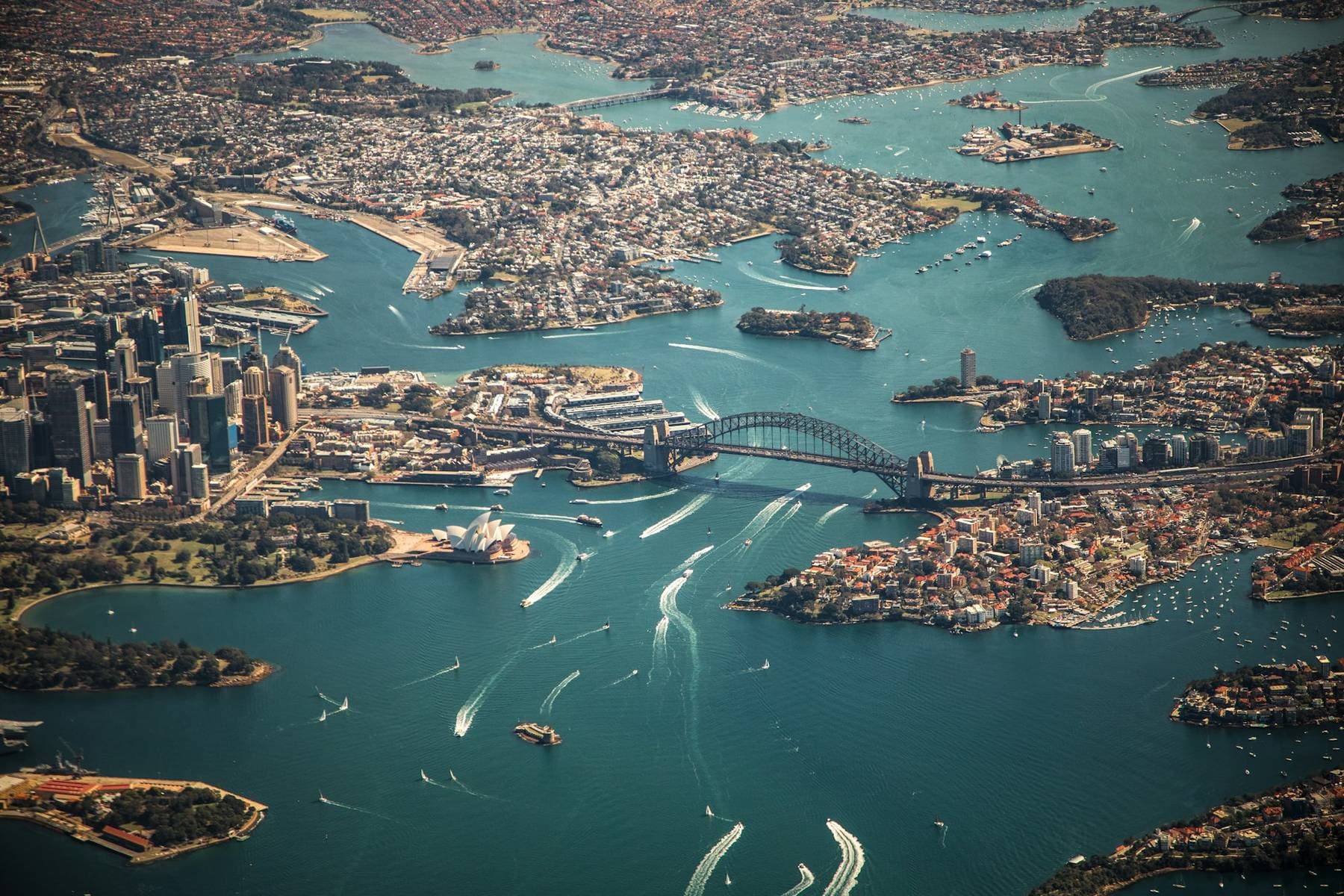
Photo: Jamie Davies on Unsplash
For most of the past decade, the upper reaches of Australian housing have behaved like a market apart. Prestige property, generally understood as the top 5 per cent of transactions by value in any given market and benchmarked nationally at $5 million and above, has grown faster, spread wider and set more records than at any time in its history. In 2026 that story is being rewritten in a quieter register.
The broader market has turned. Cotality's Home Value Index fell 1.1 per cent in September, the sixth consecutive monthly decline, leaving national dwelling values 5.2 per cent below their March 2026 high. Sydney, home to the overwhelming majority of the country's prestige sales, is leading the correction. The question for buyers and owners at the top end is not whether the cycle has shifted, but how much the finest, scarcest homes will feel it.
A record year to measure against
The starting point is extraordinary. According to Cotality data published in Westpac Private's Prestige Property Report 2026, Australia recorded 3,890 residential sales at $5 million or more in 2025, a 6.9 per cent increase on the prior year and the highest volume on record. More than 100 transactions exceeded $20 million, the threshold the report uses to define ultra-prestige.
The longer view is more striking still. Since 2015, annual $5 million-plus sales have risen by about 337 per cent, from fewer than 900 a year to almost 3,900. The number of suburbs recording at least one such sale has grown from 228 to more than 600. What was once a handful of harbourfront and inner-city enclaves has become a national asset class.
What was once a handful of harbourfront enclaves has become a national asset class.
Where the money concentrates
Sydney remains the centre of gravity. The harbour city accounted for 2,575 of the nation's prestige sales in 2025 and 24 of the top 30 suburbs by volume. Mosman led the country with 151 sales above $5 million, followed by Vaucluse with 103 and Bellevue Hill with 73. At the ultra-prestige level, Bellevue Hill (16) and Vaucluse (15) recorded the most $20 million-plus sales nationally.
Elsewhere, the map has been redrawn. Brisbane (186 sales), Perth (167) and Adelaide (38) each reached record prestige volumes in 2025, while regional markets accounted for roughly 400 transactions, just over 10 per cent of the national total. Queensland's coastal corridor between the Gold Coast and the Sunshine Coast did much of the heavy lifting, and Noosa Heads, with 27 sales, was the only regional suburb in the national top 30.
Melbourne moved the other way. Its prestige volumes fell 16.7 per cent in 2025 and its share of national $5 million-plus sales slipped to 13.3 per cent, the lowest since 2006, although Toorak, with 72 sales, remains one of the country's most active blue-chip suburbs. In the smaller capitals, activity is rare: the ACT recorded six $5 million-plus sales in 2025, and Hobart and Darwin recorded none.
The trophy tier
At the very summit, the numbers belong to a single corridor of Sydney Harbour. On Cotality's settled-sales data, all 20 of the highest residential transactions in Australian history have occurred within the past decade, and the entry point to that list has climbed to almost $60 million. Point Piper holds the top three positions, between $100 million and $130 million, with Vaucluse, Bellevue Hill and Darling Point also well represented. Toorak is Melbourne's only entrant.
John McGrath's September 2026 commentary distinguishes transactions above $5 million from the broader high-value housing market. His agency's winter-quarter reporting recorded softer annual prestige sales in Sydney and Melbourne, even as Brisbane and the Gold Coast were comparatively resilient.
Rates, tax and a different kind of buyer
The backdrop has changed sharply since the record year. Westpac Chief Economist Luci Ellis notes in the same report that the Reserve Bank lifted rates at three consecutive meetings in February, March and May 2026, returning the cash rate to 4.35 per cent, before pausing in June. Cotality's August update observed that higher-value housing has generally recorded larger declines than the lower end of the market, although that gap has narrowed as the downturn has broadened.
Tax settings have shifted too. The 2026-27 Federal Budget announced that capital gains on investments other than a primary residence will be taxed on an inflation-adjusted basis rather than with the previous 50 per cent discount, and that negative gearing against wage income will not be available for established investment properties bought after Budget night. The tax-free status of the owner-occupied home is unchanged, and newly built property retains more favourable treatment.
Offshore demand remains constrained by design. The temporary ban on foreign persons, including temporary residents and foreign-owned companies, buying established dwellings took effect on 1 April 2025, and the Government announced in the 2026-27 Budget that it will be extended to 30 June 2029, with limited exceptions for investments that add to housing supply. State surcharges on foreign purchasers add a further layer of cost.
That leaves a buyer pool dominated by Australian wealth: established families planning across generations, entrepreneurs and globally mobile professionals, expatriates re-engaging with blue-chip suburbs, and downsizers, who API Magazine reports dominate Perth's top end as owners trade large coastal homes for riverfront apartments. Transactions at this level, the Westpac report notes, are shaped more by capital availability, asset quality and scarcity than by borrowing capacity.
At the top end, capital and scarcity matter more than the cost of credit.
What still commands a premium
Across every market, the attributes that set prestige values are remarkably consistent:
- Absolute water frontage, ideally with deep-water access, a jetty or a private beach.
- Elevation and protected views, whether across a harbour, a river or open coastline.
- Land scale in established suburbs, where large holdings are rarely subdivided or sold.
- Architectural pedigree and turnkey quality, with buyers favouring finished homes over renovation projects.
- Privacy, security and proximity to leading schools and lifestyle precincts.
The outlook
The near-term signals are mixed. Westpac's report expected prestige activity in 2026 to ease from its record levels, while remaining high by historical standards. McGrath's winter-quarter prestige reports, summarised by John McGrath in late September, showed annual prestige transactions down 17 per cent in Sydney and 14 per cent in Melbourne, with Brisbane and the Gold Coast holding up comparatively well.
Longer-term drivers remain intact. McGrath cites Knight Frank's Wealth Report 2026 forecast that Australia's population of ultra-high-net-worth individuals, those worth US$30 million or more, will grow by nearly 60 per cent over the next five years. Intergenerational wealth transfer is adding depth, and the supply of genuinely irreplaceable homes is fixed.
For buyers, 2026 offers something the past few years rarely did: time, choice and room to negotiate. For owners of the very best addresses, history suggests patience is rewarded. The prestige market has always moved in cycles; what has changed is how many places across Australia now belong to it.
Sources
- Australia's prestige property market finds its footing again — API Magazine
- Prestige Property Report Australia 2026 (Cotality data) — Westpac Private
- Australian housing values down for sixth straight month in September — Cotality
- Home Value Index, results as at 31 August 2026 — Cotality
- Foreign investment: extending the ban on foreign purchases of established dwellings — Australian Taxation Office
- Genuine prestige market defies property downturn — McGrath Estate Agents
This article is general editorial commentary, not financial or property advice. Figures are drawn from the published sources above and were current at the time of writing.
More from the Prestige Series
All states National
Australia
Home Values Fall for a Sixth Straight Month as Sydney Leads the Correction
Cotality's national index slipped 1.1 per cent in September, leaving values 5.2 per cent below their March peak. Sydney is now 8.6 per cent off its high, and homes are taking far longer to sell.
2 min read
 National
Australia
All Eyes on 3 November: What the Next RBA Decision Means for Property
After four rate rises this year took the cash rate to 4.60 per cent, the Reserve Bank meets again on 2 and 3 November. September-quarter inflation figures, due on 28 October, will shape the outcome.
2 min read
 National
Australia
Rental Vacancy Climbs to 2.0% as Yields Reach Their Highest Since 2019
The rental market is easing from record tightness. National vacancy rose to 2.0 per cent in September, rent growth slowed to its smallest monthly rise since May 2025, and gross yields lifted to 3.85 per cent.
1 min read