

Victoria’s Prestige Property Market in 2026: Toorak’s Long Game
Melbourne's trophy estates and its broader upper-end market tell different stories. Agency commentary records a landmark Toorak sale, while independent market indices show a wider correction.
By Estate Guide Online Editorial4 min read
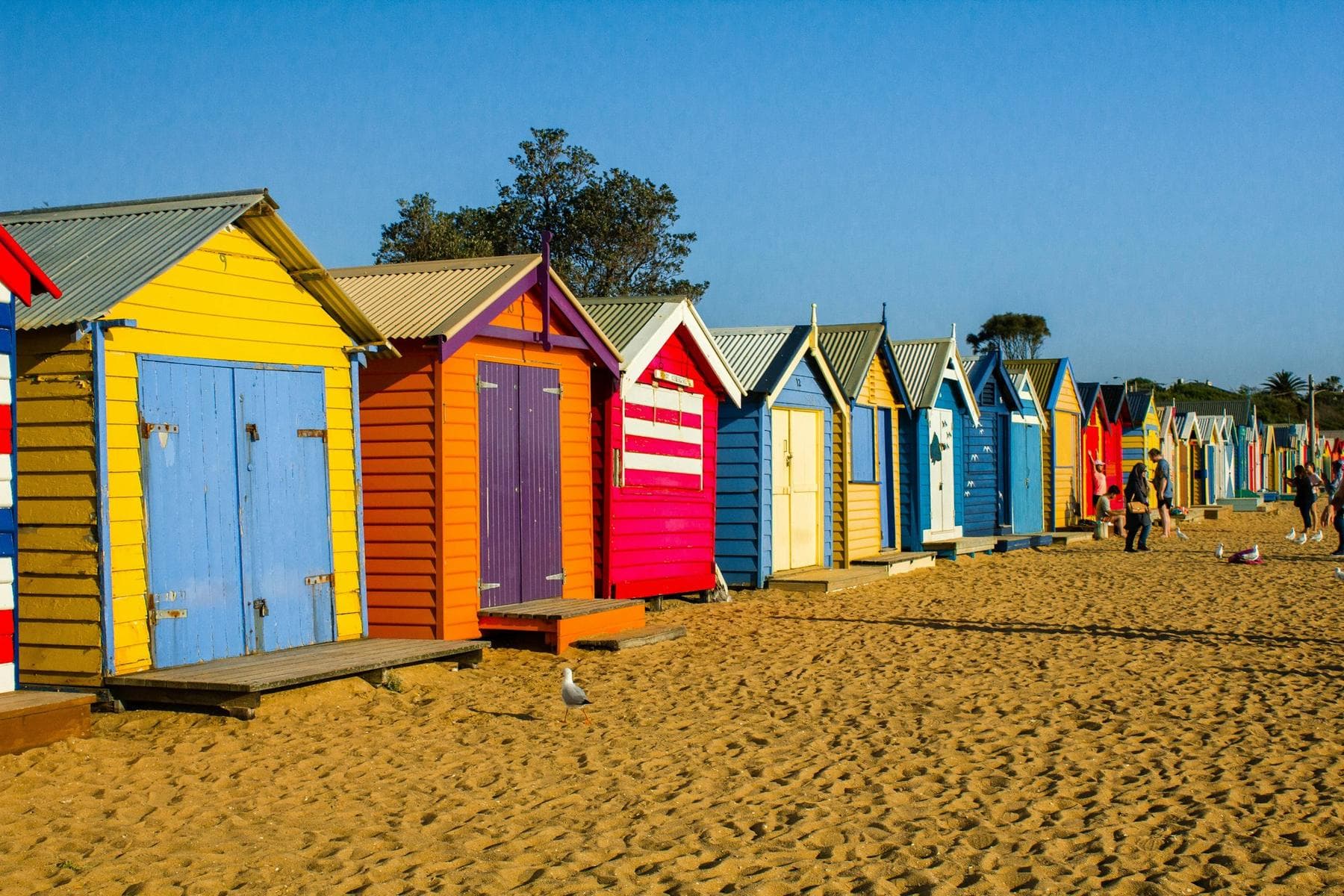
Photo: Syam (@amirahsyam) on Unsplash on Unsplash
Melbourne's top end requires two separate lenses: individual trophy transactions and the performance of the wider upper-end market. A landmark estate can attract a buyer even while an index of high-value homes is falling. Neither result, by itself, determines what another property should sell for.
Both are true at once, and together they describe a market that rewards a long view. Melbourne’s blue-chip streets have not changed. What has changed is the price of entry, and the number of people prepared to pay it right now.
What prestige means in Victoria
The industry’s working definition of prestige is the top 5% of transactions by value. Westpac Private’s 2026 Prestige Property Report, built on Cotality sales data, adopts $5 million as the national entry point, with $20 million and above marking the ultra-prestige tier. By that measure Victoria recorded 526 prestige sales in 2025, down 17.3% on the previous year and 24.7% below the 2021 peak. Melbourne accounted for 518 of them.
The contraction was sharpest at the very top, where $20 million-plus sales declined. Melbourne’s share of national prestige sales fell to 13.3%, the lowest level since 2006, even as Brisbane, Perth and Adelaide each posted record volumes. Westpac Private attributes the softness to higher holding costs and what it describes as a more complex policy environment.
The addresses that matter
Volumes may have eased, but the geography of Melbourne prestige is remarkably stable. Toorak again led the state with 72 sales of $5 million or more in 2025, followed by Brighton (53), Kew (41), Hawthorn (32) and Canterbury (31), with Balwyn, Malvern, South Yarra, Armadale and Malvern East completing the top ten. These are inner-city and bayside suburbs defined by generous landholdings, proximity to leading schools and steady owner-occupier demand. Canterbury’s entry into the national top 30 reflects the enduring appeal of large, well-located family homes in the eastern school corridors.
Regional Victoria recorded eight sales above $5 million in 2025, according to Westpac Private's report. This is a much smaller pool of transactions than Melbourne's, so a handful of sales can substantially change the annual picture.
The streets have not changed. The price of entry has.
The year of Coonac
In a February 2025 market update, Marshall White's John Bongiorno described the recent sale of Toorak's Coonac estate by a competing agency as a new Victorian prestige benchmark. His commentary did not disclose a settled price.
A market in reset
The broader numbers are sobering. Cotality’s Home Value Index shows Melbourne dwelling values fell 1.1% in August 2026 and 4.7% over the year, leaving the city’s median dwelling value at $786,718. Cotality’s September Housing Chart Pack found upper-quartile house values in Melbourne were 10.5% below their peak, with a 6.6 percentage-point gap between upper and lower-quartile declines, the widest divergence of any capital.
A suburb median depends on which homes sell in the reporting period. A change in the mix of small homes, apartments and substantial estates can change that median without describing the price movement of a comparable property. Buyers should examine the property type, period and number of transactions alongside any headline statistic.
Tax settings and the buyer pool
Victoria’s tax environment is a defining feature of its prestige market. Since the 2024 land tax year the tax-free threshold has been lowered from $300,000 to $50,000, and holdings valued at $300,000 or more attract a $975 charge plus an additional 0.1% on the land tax rate under the state’s COVID Debt Repayment Plan. That bears most heavily on second homes and investment property, which is why the peninsula and the holiday market have felt it first.
Foreign buyers face further barriers. Victoria levies an 8% foreign purchaser additional duty on residential property and a 4% absentee owner surcharge on land tax. At a federal level, foreign persons have been banned from buying established dwellings since 1 April 2025, and the 2026–27 federal Budget announced an extension of that ban to 30 June 2029. The same Budget limited negative gearing on established dwellings bought after 12 May 2026, effective from July 2027, and replaced the 50% capital gains discount with an inflation-based approach and a 30% minimum tax from 1 July 2027. A principal residence remains exempt from capital gains tax.
The result is a buyer pool dominated by local owner-occupiers: families upsizing into school zones, established households trading within the same suburbs, and interstate buyers drawn by the discount to Sydney. Westpac Private’s research notes that prestige purchases are driven more by available capital, property quality and scarcity than by borrowing capacity, which helps explain why trophy homes continue to sell when the broader market is soft.
What commands a premium
- Irreplaceable land: substantial allotments in Toorak, Kew and Canterbury, where large blocks are rarely offered.
- Bayside frontage: Brighton’s beachfront homes on the Esplanade set the suburb’s records.
- Heritage architecture: restored nineteenth-century estates such as Coonac remain the rarest assets in the city.
- School proximity: the eastern corridors through Hawthorn, Kew and Canterbury continue to attract families.
- Turnkey condition: in a cautious market, renovated or newly built homes attract the deepest competition.
In Melbourne, the premium is for land and legacy. Everything else can be built.
The outlook
Cotality reports capital city listings 24% higher than a year ago, longer selling times and larger vendor discounts, conditions it characterises as a buyer’s market. It also notes that a growing number of economists expect the Reserve Bank could lift the cash rate again, which would further constrain borrowing. Near-term price weakness in Melbourne’s upper quartile is therefore likely to persist.
Yet the fundamentals that made Toorak, Brighton and Kew Australia’s most consistent prestige enclaves outside Sydney are unchanged: established streetscapes, generous land, leading schools and a deep pool of local wealth. For buyers with capital and patience, 2026 offers something Melbourne’s top end has not provided in a long time, which is choice. For vendors, the lesson of Coonac holds: truly exceptional property still finds its buyer, provided it is priced for the market that exists rather than the one that has passed.
Sources
- Prestige Property Report Australia 2026 — Westpac Private (data: Cotality)
- Home Value Index, September 2026 (results to 31 August 2026) — Cotality
- Monthly Housing Chart Pack, September 2026 — Cotality
- COVID Debt Repayment Plan: land tax changes — State Revenue Office Victoria
- Understanding foreign purchaser additional duty — State Revenue Office Victoria
- Understanding the absentee owner surcharge — State Revenue Office Victoria
- Government breaks promise with restrictions to negative gearing and capital gains tax discount in federal budget — ABC News, 12 May 2026
- Banning foreign purchases of established dwellings — Australian Taxation Office
- A Confident Start for 2025 Real Estate — Marshall White — John Bongiorno, 13 February 2025
This article is general editorial commentary, not financial or property advice. Figures are drawn from the published sources above and were current at the time of writing.
More from the Prestige Series
All states VIC
Victoria
Melbourne House Median Reaches $973,500 as Units Gain Faster
REIV’s December quarter 2025 results show a fourth quarter of growth across major market segments, with Melbourne units and apartments rising 2.0 per cent to $656,500.
1 min read
 VIC
Victoria
Victoria Lost More Than 24,000 Rentals in 2024 as Investors Sold
Bond data showed Victoria's rental stock shrank by 3.6 per cent in a single year. First home buyers accounted for a larger share of lending, while statewide rent growth slowed in the year to April 2025.
2 min read
 VIC
Victoria
Victoria Names 25 More Train and Tram Zones for Higher-Density Homes
The February 2025 announcement took Melbourne's activity centre program to 60 locations, with planning rules to allow taller housing around stations from Noble Park to Kew. The government says the reforms will lead to more than 300,000 new homes.
2 min read