

NSW Low and Mid-Rise Housing Rules Take Effect Around 171 Centres
From 28 February 2025, terraces, townhouses and low and mid-rise apartment buildings became permissible within walking distance of nominated stations and town centres across Sydney, the Central Coast, the Hunter and the Illawarra.
By Estate Guide Online Editorial3 min read
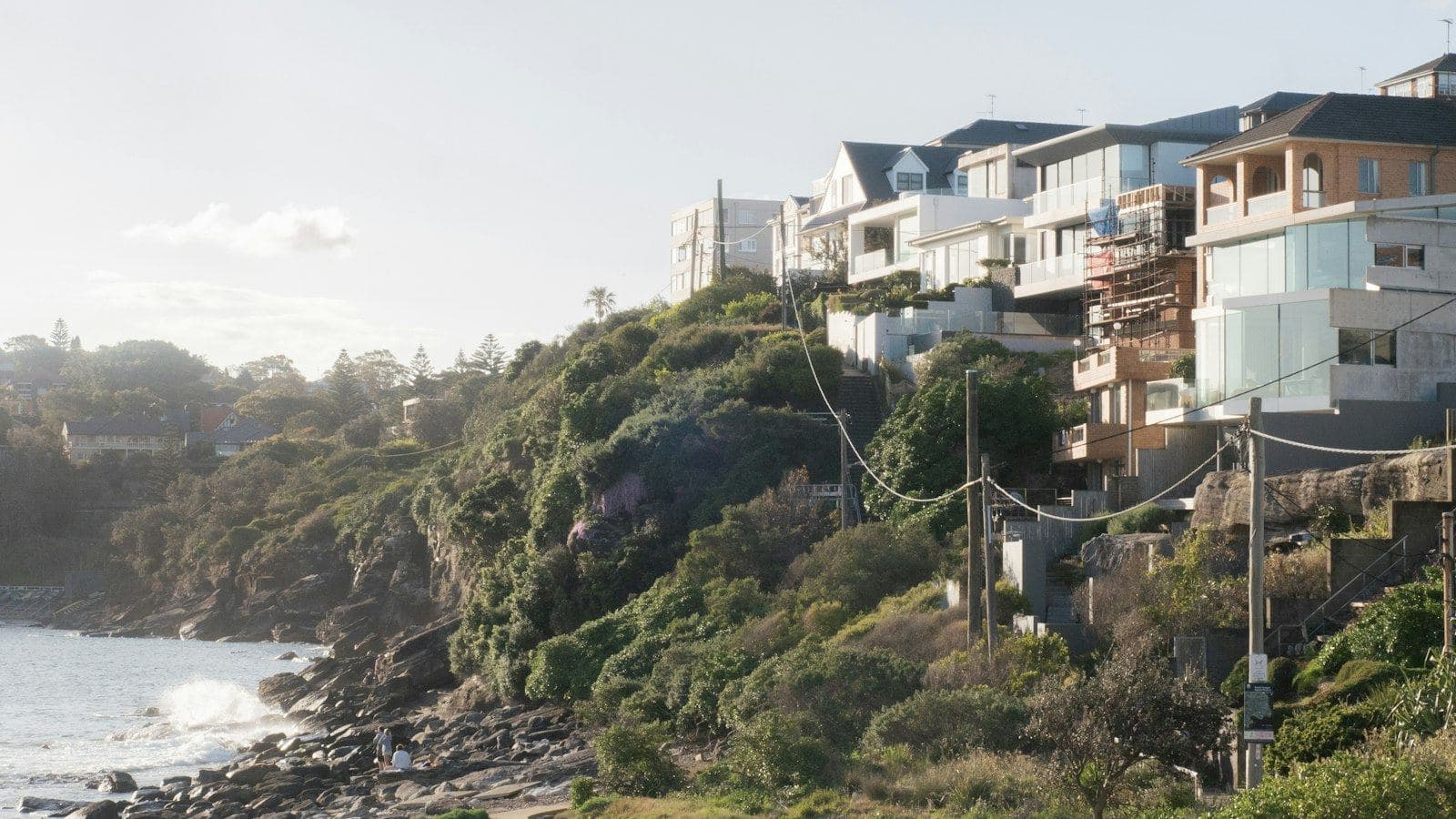
Photo: Andy Wang on Unsplash
The second and larger stage of the NSW Government's Low and Mid-Rise Housing Policy came into force on 28 February 2025, changing what can be built on a large share of residential land close to public transport in the state's major cities.
The government says the reforms will deliver about 112,000 homes over five years by allowing dual occupancies, terraces, townhouses and residential flat buildings in areas where councils had effectively ruled them out.
What changed
The new planning controls apply to residential zones within 800 metres, or roughly a 10-minute walk, of 171 nominated town centres and train or light rail stations across metropolitan Sydney, the Central Coast, the Illawarra-Shoalhaven and the Hunter. They are set out in the State Environmental Planning Policy (Housing) 2021.
In low-density R1 and R2 zones within those areas, the restriction on terraces, townhouses and low-rise apartment buildings has been lifted. In medium-density R3 and R4 zones, mid-rise residential flat buildings are now permitted. The Department of Planning defines low-rise housing as generally one to two storeys and mid-rise housing as three to six storey apartment buildings.
The government's announcement put the scale of the previous restrictions in stark terms: only two of 33 councils in Greater Sydney allowed terraces and townhouses in low-density zones, and residential flat buildings were prohibited in 60 per cent of medium-density zones.
The reform targets the 'missing middle', the townhouses and small apartment blocks that sit between the detached house and the tower.
Two stages
The policy has been delivered in two steps. Stage 1, which began on 1 July 2024, permitted dual occupancies and semi-detached homes in the R2 low-density zone across all of NSW. Stage 2 extended the changes to terraces, townhouses and apartments around the nominated centres.
The reforms are also designed to work alongside the NSW Pattern Book of architect-designed low and mid-rise homes, giving those who use the patterns access to fast-tracked approval in the affected areas.
Exclusions and local reaction
The policy does not apply on land with high flood or bushfire risk, where emergency evacuation would be difficult, close to dangerous goods pipelines or under high aircraft noise. The Bathurst, Hawkesbury, Blue Mountains and Wollondilly local government areas were excluded. Controls do apply in heritage conservation areas, subject to council assessment, but not to heritage items.
Consultation was extensive: the draft was exhibited from 15 December 2023 to 23 February 2024 and drew nearly 8,000 submissions, with traffic, local character and infrastructure the most common concerns. Councils can still assess matters such as parking, light access and minimum frontages.
Not every council welcomed the change. Woollahra Council, in Sydney's east, published its own analysis arguing that the policy allows up to a 221 per cent increase in building height and a 462 per cent increase in floor space ratio around station and town centres in its area, without extra state funding for local infrastructure.
Why it matters for buyers and owners
For owners of well-located blocks near stations, the rules can open up development options that did not previously exist, although each site's eligibility depends on its zoning, walking distance and constraints. The department stresses that its indicative map cannot account for individual property constraints, and landowners need to check the legislation.
For buyers, the longer-term promise is more choice between the detached house and the high-rise apartment. How quickly that translates into completed homes will depend on construction costs, feasibility and approvals in the years ahead.
Sources
- Low and Mid-Rise policy to unlock 112,000 homes in five years — NSW Government
- Low and Mid-Rise Housing Policy — NSW Planning
- NSW Government's planning changes to low and mid-rise housing — Woollahra Municipal Council
This article is general editorial commentary, not financial or property advice. Figures are drawn from the published sources above and were current at the time of writing.
More from the Prestige Series
All states NSW
New South Wales
New South Wales: The Harbour City Holds the Crown
Sydney still writes Australia's prestige record book, from Point Piper's nine-figure estates to a record run of $20 million-plus sales. In 2026, even the harbour's finest addresses are being priced with care.
4 min read
 NSW
New South Wales
Elaine’s $130 Million Sale Stands Out in Pillinger’s Harbour Market Review
The selling agency’s winter 2025 report records the Point Piper estate at $130 million and names Brad Pillinger as the selling agent, confirming one of Sydney’s landmark transactions.
1 min read
 NSW
New South Wales
RBA Lifts Rates to 3.85 Per Cent as Sydney's Market Stalls
The Reserve Bank's first rate rise since 2023 arrived on 3 February 2026, only months after the 2025 easing cycle ended. Within weeks, Sydney home values had flattened and upper-quartile prices were slipping.
2 min read